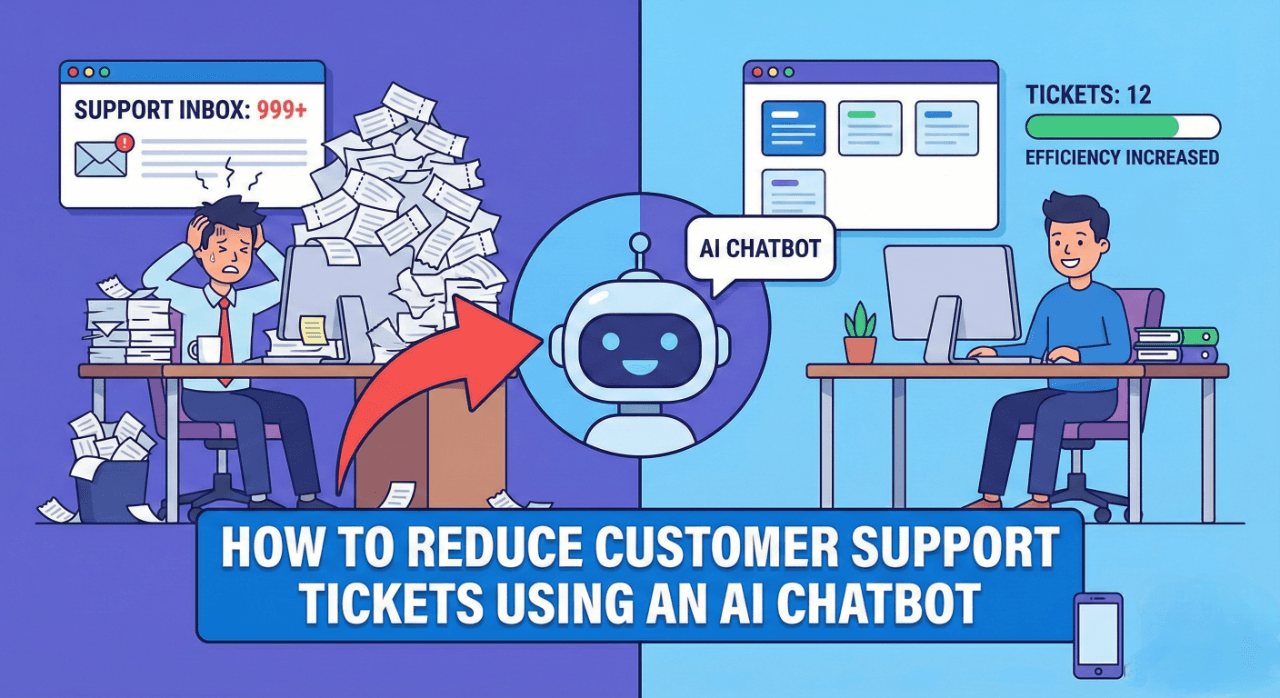
The Support Cost Crisis Killing SaaS Margins
Your SaaS startup just hit $500K ARR. Congratulations—you're growing fast.
Then you look at your support costs and your stomach drops.
You're spending $15,000 monthly on a support team of three people who can barely keep up. Your support-to-revenue ratio is 3%—and climbing. Each new customer adds to the support burden. Your unit economics are getting worse, not better.
Meanwhile, investors want to see a path to profitability. They're asking tough questions: "Why are your support costs scaling linearly with revenue?" "When will you achieve operational leverage?" "How do you plan to maintain quality while reducing headcount costs?"
Here's the uncomfortable truth: traditional customer support doesn't scale for SaaS startups.
Hiring more agents increases costs proportionally. Training new team members takes weeks. Quality becomes inconsistent. Response times suffer during growth spurts. And while you're spending $50,000+ annually per support agent, your competitors are serving 10x more customers with AI-powered support.
The startups winning right now aren't choosing between low costs and great support. They're achieving both simultaneously using AI chatbots trained specifically on their product knowledge.
This isn't theoretical. Real SaaS startups are cutting support costs by 40-70% while improving customer satisfaction scores and reducing churn. Some are handling 5,000+ monthly conversations with zero additional headcount.
In this guide, you'll see exactly how they're doing it—with real numbers, specific strategies, and actionable frameworks you can implement in your startup this month.
The Real Cost of Customer Support for SaaS Startups
Before we explore solutions, let's quantify the problem. Most founders dramatically underestimate their true support costs.
Direct labor costs (the obvious part):
A single support agent typically costs $45,000-$65,000 annually in salary for startups, depending on location and experience level. Add employer taxes, benefits, and equipment, and you're looking at $55,000-$80,000 per agent fully loaded.
For a three-person support team, that's $165,000-$240,000 annually before you consider any other factors.
Indirect costs (what founders miss):
Support team management consumes founder or senior leadership time. If you're spending 10 hours weekly on support issues, training, and quality assurance, that's 520 hours annually—worth $50,000+ of your time at any reasonable founder hourly rate.
Support infrastructure costs add up: helpdesk software ($100-$500/month), knowledge base tools ($50-$200/month), chat platforms, screen recording tools, and various productivity applications easily reach $5,000-$10,000 annually.
Training and onboarding new support agents requires 2-4 weeks before they're productive. During high-growth phases when you're constantly hiring, you're paying full salary for partial productivity, creating hidden inefficiency costs.
Opportunity costs (the most expensive):
Every hour your technical co-founder spends answering support questions is an hour not building product features. If your engineering team handles 20% of support escalations, you're losing development velocity worth hundreds of thousands in delayed feature releases.
Support bottlenecks directly impact revenue. When response times exceed customer expectations, trial conversions drop. When onboarding friction isn't immediately resolved, activation rates suffer. When paying customers can't get answers quickly, churn accelerates.
One SaaS founder calculated that reducing average support response time from 6 hours to under 1 hour increased their trial-to-paid conversion by 23%. That single improvement was worth an additional $180,000 ARR annually—far exceeding their entire support team cost.
The scaling problem:
Here's why traditional support economics break startups: support volume scales roughly with customer count, but support costs scale linearly with team size.
If you grow from 100 to 1,000 customers (10x growth), your support volume increases approximately 10x. To maintain the same quality and response times, you need roughly 10x the support capacity—which means 10x the cost.
Meanwhile, your revenue might only be 5-7x higher if you're moving downmarket or have heavy usage-based pricing. Your support-to-revenue ratio deteriorates as you grow.
This creates an impossible situation: maintain quality and hurt margins, or reduce costs and damage customer experience. Neither option works long-term.
Why SaaS Startups Are Uniquely Positioned for AI Support
Repetitive question patterns:
SaaS products generate predictable question categories: How do I set up [feature]? Does this integrate with [tool]? What's included in different pricing tiers? How do I invite team members? Where do I find [setting]?
Analysis of SaaS support tickets reveals that 70-80% fall into 15-20 common question patterns. These repetitive questions are perfect for AI automation—they're well-documented, have consistent answers, and don't require human judgment.
Comprehensive documentation:
Most SaaS startups already maintain detailed documentation, help centers, and knowledge bases. This existing content becomes AI training data. You've already created the answers—AI simply makes them instantly accessible through conversational interfaces.
Unlike e-commerce where every product might need unique descriptions, or service businesses where every customer situation differs dramatically, SaaS products have consistent functionality that can be thoroughly documented once and applied to thousands of customer conversations.
Digital-native customers:
SaaS buyers and users are comfortable with digital interactions. They don't need or expect phone calls for basic questions. They're already using chat interfaces, reading documentation, and troubleshooting independently. An AI chatbot fits naturally into their existing support expectations.
Clear scope boundaries:
SaaS support questions have relatively clear boundaries. Questions about how the product works, what features do, and how to accomplish tasks can be answered definitively from documentation. This is unlike ambiguous domains where AI might struggle with nuanced judgment calls.
When questions move beyond product functionality—billing disputes requiring refunds, bug reports needing investigation, feature requests for the roadmap—escalation to humans is straightforward and appropriate.
High-value humans-in-the-loop:
For the 20-30% of questions requiring human expertise, SaaS support can provide extremely high-value interactions. When your agents aren't answering "How do I reset my password?" for the hundredth time, they can focus on strategic customer success, complex technical troubleshooting, and relationship building that directly impacts expansion revenue.
The AI Chatbot Support Model: How It Works for SaaS
Let's break down exactly how successful SaaS startups structure their AI-powered support operations.
Tier 1: AI chatbot handles documentation-based questions
The AI chatbot becomes your first line of support, available 24/7/365. It answers questions like:
- Feature functionality and usage
- Setup and configuration instructions
- Pricing and plan comparisons
- Integration capabilities and procedures
- Account management basics
- Navigation and interface questions
These questions have definitive answers found in your documentation. The AI provides instant, accurate responses based on your exact product knowledge—no generic answers, no "check our help center" deflections.
Tier 2: Human agents handle complex situations
When conversations exceed the AI's capability, seamless handoff occurs. Human agents receive full conversation context and handle:
- Technical bugs requiring investigation
- Billing issues needing refunds or adjustments
- Feature requests and product feedback
- Complex implementation questions
- Frustrated customers needing empathy and relationship repair
- Account-specific troubleshooting
This creates a powerful division of labor: AI handles volume and repetition with perfect consistency. Humans provide judgment, creativity, and relationship management where it actually matters.
The handoff mechanism:
Successful implementations make escalation frictionless. Customers can request a human at any point with phrases like "talk to a person" or "I need human help." The AI also recognizes when it's struggling—if confidence drops or the conversation cycles without resolution, automatic escalation triggers.
When handoff occurs, agents see the complete conversation history. They don't ask customers to repeat themselves. This context transfer transforms escalation from frustration into seamless elevation of support quality.
Continuous improvement loop:
Every conversation—both AI-handled and escalated—generates learning opportunities. When humans answer questions the AI struggled with, those answers become training examples. When customers ask questions not covered in documentation, new help articles get created and added to the AI's knowledge base.
This creates a flywheel effect: the more customers use your chatbot, the better it becomes at answering questions, which reduces escalations, which gives human agents more time to improve documentation, which makes the AI even more effective.
Real SaaS Startup Case Studies: The Numbers
Let's look at concrete examples of startups that have transformed their support economics with AI chatbots.
Case Study 1: Project Management SaaS ($800K ARR)
Before AI implementation:
- ✓4 full-time support agents
- ✓$220,000 annual support costs
- ✓Average response time: 4.2 hours
- ✓1,850 tickets monthly
- ✓Support cost ratio: 27.5% of revenue
After implementing AI chatbot (6 months in):
- ✓2 full-time support agents + AI chatbot
- ✓$110,000 annual support costs (50% reduction)
- ✓Average response time: 12 minutes
- ✓2,100 tickets monthly (handled growth without adding staff)
- ✓Support cost ratio: 13.75% of revenue
Key results:
- ✓AI deflection rate: 71% of conversations resolved without human intervention
- ✓Customer satisfaction score increased from 3.8/5 to 4.3/5
- ✓Trial-to-paid conversion improved 18% due to faster onboarding support
- ✓Saved $110,000 annually while improving customer experience
The founder noted: "We expected to reduce costs. We didn't expect customers to be happier with AI support than our previous human-only approach. The instant responses during trial periods made a massive difference in conversion."
Case Study 2: Marketing Automation Platform ($1.2M ARR)
Before AI implementation:
- ✓5 support agents + 1 support manager
- ✓$340,000 annual support costs
- ✓Support handled during business hours only (9 AM - 6 PM EST)
- ✓Growing backlog during product launches
- ✓40% of support tickets were basic "how-to" questions
After implementing AI chatbot (8 months in):
- ✓3 support agents (no dedicated manager, founder oversight only) + AI chatbot
- ✓$165,000 annual support costs (51% reduction)
- ✓24/7 support coverage
- ✓Zero backlog even during product launches
- ✓68% of questions fully resolved by AI
Key results:
- ✓International customers (previously underserved due to timezone differences) gave satisfaction scores 35% higher post-implementation
- ✓After-hours support requests (previously ignored until next day) now get instant answers, reducing next-day ticket volume by 47%
- ✓Support team morale dramatically improved—agents handle interesting problems instead of repetitive questions
- ✓Product team receives better feedback because agents have time for detailed feature request documentation
The CEO shared: "We realized we'd been providing terrible service to half our customers simply because of time zones. The AI chatbot gave us global support coverage we could never afford with human-only support."
Case Study 3: Developer Tools SaaS ($2.5M ARR)
Before AI implementation:
- ✓8 support/DevRel hybrid team members
- ✓$520,000 annual support costs
- ✓Heavy reliance on engineering team for escalations (20% of engineering time)
- ✓Developer frustration with slow API documentation answers
- ✓Community Slack becoming noisy and unmanageable
After implementing AI chatbot (4 months in):
- ✓4 dedicated support specialists + AI chatbot
- ✓$260,000 annual support costs (50% reduction)
- ✓Engineering escalations reduced to 5% of engineering time
- ✓AI chatbot handles API documentation questions, integration guides, and troubleshooting
- ✓Slack community refocused on strategic discussions and feature feedback
Key results:
- ✓Freed up approximately 1,500 engineering hours annually (worth $150,000+ in development velocity)
- ✓Developer satisfaction scores increased from 3.2/5 to 4.1/5
- ✓API integration time decreased 30% due to instant, accurate answers during setup
- ✓Support team evolved into proactive customer success, driving upsells worth $180,000 additional ARR
The CTO noted: "Our engineers were our most expensive support resource. Moving repetitive technical questions to AI chatbots was like getting three months of engineering capacity back annually."
Case Study 4: Vertical SaaS for Real Estate ($450K ARR)
Before AI implementation:
- ✓2 support agents (stretched thin)
- ✓$120,000 annual support costs
- ✓Couldn't hire a third agent without hurting margins
- ✓Response times averaging 8+ hours
- ✓Churn increasing due to onboarding friction
After implementing AI chatbot (3 months in):
- ✓Same 2 support agents + AI chatbot
- ✓$65,000 annual support costs (46% reduction through using customsupportai.com instead of hiring third agent)
- ✓Response times under 30 minutes
- ✓Onboarding completion rate improved 41%
- ✓Churn reduced by 1.8 percentage points
Key results:
- ✓Avoided hiring third support agent while handling 60% more volume
- ✓Served evening/weekend customers (real estate agents working non-traditional hours) who previously got no support
- ✓Both support agents given raises and promotions to customer success roles, adding revenue responsibility
- ✓Customer lifetime value increased due to better onboarding and reduced churn
The founder explained: "We were at a breaking point—either hire another support person and destroy our margins, or accept terrible customer experience. AI chatbots gave us a third option we didn't know existed."
The Cost Breakdown: AI vs. Traditional Support
Let's model the economics explicitly for a typical growing SaaS startup.
Traditional support model (1,500 monthly tickets):
- ✓3 support agents at $65,000 each fully loaded: $195,000 annually
- ✓Helpdesk software: $3,600 annually
- ✓Knowledge base tool: $1,200 annually
- ✓Other support tools: $2,400 annually
- ✓Manager/founder oversight (10 hrs/week): $50,000 value annually
- ✓Total annual cost: $252,200
- ✓Cost per ticket: $14.01
- ✓Support-to-revenue ratio (at $1M ARR): 25.2%
AI-powered support model (same 1,500 monthly tickets):
- ✓1.5 support agents at $65,000 each fully loaded: $97,500 annually
- ✓AI chatbot platform : $6,000-$12,000 annually
- ✓Helpdesk software: $3,600 annually
- ✓Knowledge base tool: $1,200 annually
- ✓Manager/founder oversight (3 hrs/week): $15,000 value annually
- ✓Total annual cost: $123,300 - $129,300
- ✓Cost per ticket: $6.85 - $7.18
- ✓Support-to-revenue ratio (at $1M ARR): 12.3% - 12.9%
- ✓Savings: $122,900 - $128,900 annually (49-51% reduction)
As you scale to 3,000 monthly tickets: Traditional model would require 6 agents: $480,000+ annually. AI-powered model might need 3 agents: $240,000 annually. Additional savings: $240,000 annually at scale
The economics become even more compelling as you grow. The AI chatbot cost stays relatively flat while handling increasing volume. Traditional support costs continue scaling linearly.
Implementation Strategy: How to Deploy AI Support in Your SaaS Startup
You're convinced AI chatbots make financial sense. How do you actually implement this without disrupting your existing support operations?
Phase 1: Preparation (Week 1-2)
Audit your current support operations. Export the last 3-6 months of support tickets and categorize them. What percentage are simple "how-to" questions? Which questions appear most frequently? Where is your documentation incomplete or outdated?
This analysis reveals your AI opportunity. If 70%+ of tickets are repetitive questions with documented answers, you have massive deflection potential.
Simultaneously, gather your training data. Compile your help center, product documentation, FAQ pages, onboarding guides, and API references. Export previous support conversations showing how your team answers common questions.
Update your documentation where gaps exist. If you notice customers frequently asking questions not covered in your help center, create those articles now. This upfront work pays dividends when your AI chatbot can confidently answer those questions.
Phase 2: Setup and Training (Week 2-3)
Choose an AI chatbot platform designed for SaaS support. customsupportai.com is purpose-built for exactly this use case—train your chatbot on your documentation, deploy it across your website and product, and manage everything from one dashboard.
Upload your documentation and let the AI process it. Most platforms, including customsupportai.com, make this simple: paste your website URL for automatic crawling, upload PDF/Word documents, or directly input additional Q&A pairs.
Configure your chatbot's behavior. Set an appropriate tone matching your brand—professional and helpful for enterprise SaaS, friendly and conversational for consumer products. Define when escalation to humans should occur and what topics require immediate human involvement.
Phase 3: Testing (Week 3-4)
Before exposing customers to your AI chatbot, thoroughly test it internally. Have your support team, product team, and founders ask it questions. Try the most common questions from your ticket analysis. Test edge cases and tricky scenarios.
Create a scorecard: For 100 typical customer questions, does the AI provide accurate, helpful answers? Aim for 80%+ accuracy before launch. For questions it can't answer well, either improve documentation or flag them for human-only handling.
Test the escalation flow. When you request a human, does the handoff work smoothly? Do agents receive adequate context? Can they seamlessly continue the conversation?
Phase 4: Soft Launch (Week 4-6)
Start with a limited rollout. Deploy your chatbot to 25% of website visitors or only in specific sections (like your pricing page or documentation). This controlled launch lets you catch issues before they impact most customers.
Monitor conversations obsessively during the first week. Review every escalated conversation. Look for patterns in what works and what doesn't. Update training data based on real customer interactions.
Gather feedback from your support team. Are they seeing conversation quality that makes their jobs easier? Are customers frustrated or delighted? Use their frontline insights to refine the AI's responses.
Phase 5: Full Deployment (Week 6-8)
Once your soft launch proves successful (monitoring deflection rate, satisfaction scores, and escalation quality), expand to all customers.
Add the chatbot widget to your website, customer dashboard, and anywhere customers seek help. Make it prominent and easily accessible.
Update your support workflows. Train your human agents on how to work alongside the AI—how to review conversations it's handled, when to override AI responses, and how to feed improvements back into the system.
Phase 6: Optimization (Ongoing)
Establish a weekly review process. Examine chatbot analytics: deflection rate, common questions it struggles with, customer satisfaction ratings, and escalation patterns.
Continuously improve training data. When new features launch, immediately add documentation to the AI's knowledge base. When customers ask questions the AI can't answer, create help articles addressing those topics.
Refine your escalation criteria based on what you learn. If certain question types consistently require human judgment, set up automatic routing. If the AI is over-escalating manageable questions, adjust confidence thresholds.
Track business metrics beyond support efficiency. How does AI chatbot implementation affect trial conversion rates? Onboarding completion? Customer churn? Product adoption? The best implementations drive improvements across multiple business KPIs.
Overcoming Common SaaS Founder Objections
Every time we discuss AI chatbots with SaaS founders, similar concerns emerge. Let's address them directly.
"Our customers expect human support—they'll hate talking to a bot"
This assumption is outdated. Modern AI chatbots provide conversational, helpful responses indistinguishable from human agents for straightforward questions. Customers care about getting accurate answers quickly—not whether those answers come from humans or AI.
In fact, many customers prefer instant AI responses over waiting hours for human agents, particularly for simple questions during trial periods or off-hours.
The key is transparency and easy escalation. Don't pretend your chatbot is human. Make it simple to reach a person when needed. When you do this, customer satisfaction typically increases with AI implementation.
"Our product is too complex for AI to handle"
Complexity makes AI chatbots more valuable, not less. Complex products generate more support questions, making the volume reduction from AI deflection even more impactful.
AI chatbots aren't replacing deep technical troubleshooting or strategic consulting—they're handling the 70% of questions that are variations of "how do I do [task]" or "what does [feature] do?" These questions have definitive answers regardless of product complexity.
Your sophisticated product likely has extensive documentation explaining that complexity. AI chatbots make that documentation conversationally accessible instead of requiring customers to search through articles hoping to find relevant sections.
"We're too early-stage—we should focus on product, not support automation"
Early-stage is actually the ideal time to implement AI support. You're establishing patterns that will scale with your company.
If you're spending 15-20 hours weekly answering repetitive customer questions, that's 15-20 hours not building product. An AI chatbot trained on basic documentation can reclaim most of that time within weeks.
Early-stage startups also have the advantage of simpler products with less documentation to create. You can get an effective AI chatbot running with 10-15 good help articles covering your core features.
The longer you wait, the more complex implementation becomes and the more founder time you've wasted on support.
"What if the AI gives wrong answers and damages customer relationships?"
This is a legitimate concern worth addressing through proper implementation, not by avoiding AI entirely.
Modern AI chatbots designed for customer support include confidence scoring. When the AI isn't certain of an answer, it either escalates to humans or indicates uncertainty. This prevents confidently delivering incorrect information.
Proper testing before launch catches major accuracy issues. Starting with high confidence thresholds (meaning the AI only answers when very certain) prevents wrong answers while you refine the system.
And candidly, human support agents also sometimes give wrong answers—especially newer team members or when information is out of date. AI chatbots trained on current documentation can be more consistent than human agents working from memory.
The risk of occasional wrong answers (which you'll catch and fix through monitoring) is far less than the certainty of slow response times, inconsistent quality, and mounting support costs with human-only support.
"We can't afford to lose the relationship-building that comes from support interactions"
You're not losing relationship-building—you're focusing it where it matters most.
Generic "how do I reset my password" interactions don't build relationships. Quick, accurate answers to simple questions build satisfaction, but deep relationships form during complex problem-solving, strategic consultation, and proactive success initiatives.
When AI chatbots handle routine questions, your human agents have significantly more capacity for high-value relationship activities: onboarding calls with new customers, quarterly business reviews with enterprise accounts, proactive outreach when usage patterns suggest confusion, and strategic consultation driving expansion revenue.
You'll build stronger relationships with fewer, more meaningful human interactions than you ever could when agents spent 70% of their time on repetitive questions.
How customsupportai.com Accelerates This Transformation
While AI chatbot benefits apply across platforms, the right tool dramatically affects implementation speed and success rate.
customsupportai.com was built specifically for SaaS startups facing exactly the challenges outlined in this article:
- Train once, deploy everywhere: Upload your documentation, paste your website URL for automatic crawling, and your AI chatbot learns your entire product. What would take weeks of manual configuration happens in hours.
- Purpose-built for SaaS support: Unlike generic chatbot builders or consumer-focused tools, customsupportai.com understands SaaS support patterns. It handles technical questions, multi-step processes, integration inquiries, and feature explanations naturally.
- Seamless human handoff: When conversations need human expertise, transfer happens instantly with full context. Your agents see the complete conversation history, customer details, and can continue exactly where the AI left off—no frustrated customers repeating themselves.
- Learning from every interaction: Mark helpful responses to reinforce good patterns. Flag problematic answers for improvement. The AI learns from your team's expertise, becoming more accurate with every correction.
- Analytics that drive decisions: See exactly which questions get asked most frequently, where your AI performs well, where it struggles, and how support costs are trending. These insights guide documentation improvements and process refinements.
- No engineering resources required: You don't need developers to implement, maintain, or update your AI chatbot. If you can edit a document, you can train your support AI.
- Scalable pricing that aligns with startup economics: Unlike enterprise chatbot platforms charging $1,000+ monthly regardless of usage, customsupportai.com offers startup-friendly pricing that scales with your growth. You invest meaningfully in automation without destroying your margins.
Hundreds of SaaS startups have deployed support automation, collectively handling millions of customer conversations while reducing support costs by an average of 53%.
The Competitive Advantage of Superior Support Economics
Better unit economics enable aggressive growth:
When your support costs are 12% of revenue instead of 25%, you have significantly more capital available for customer acquisition. You can afford higher CAC, shorter payback periods, and more experimental marketing channels while maintaining path to profitability.
This flexibility accelerates growth. While competitors constrain spending to manage support costs, you can invest aggressively in growth knowing your support economics won't deteriorate.
Faster response times improve conversion:
Trial users asking pre-purchase questions at 11 PM receive instant, accurate answers instead of waiting until your support team returns the next morning. This immediacy directly impacts conversion rates—often by 15-25% for SaaS products with complex onboarding.
Every percentage point improvement in trial conversion is worth thousands in additional ARR. The revenue impact of instant support often exceeds the cost savings.
24/7 global coverage without global team:
Serving international customers traditionally required support team members across multiple time zones—expensive and complex for startups. AI chatbots provide consistent support quality to customers in Singapore at 3 AM EST or London at 6 AM EST with zero additional cost.
This global reach opens markets you might have avoided due to support complexity. You can confidently expand internationally knowing customers won't face timezone-based support gaps.
Support team evolves into revenue organization:
When agents aren't overwhelmed by ticket volume, they transition from reactive support to proactive customer success. They can identify expansion opportunities, conduct strategic onboarding, and build relationships that reduce churn and drive upsells.
Several startups using customsupportai.com have restructured their support teams into customer success organizations directly responsible for retention and expansion revenue—transforming a cost center into a revenue driver.
Investor appeal and valuation impact:
When fundraising, strong unit economics and operational efficiency directly influence valuation. SaaS startups demonstrating scalable support models with decreasing cost ratios as they grow command premium valuations.
Investors specifically ask about support scalability. Showing an AI-powered support model that's already proven effective with current customers while maintaining low costs provides compelling evidence of operational maturity.
These timelines assume consistent effort on documentation improvement and system refinement. Startups that treat AI chatbot deployment as "set it and forget it" see significantly worse results.
Action Plan: Your Next Steps
You now understand how SaaS startups are dramatically reducing support costs while improving customer experience. Here's exactly what to do next:
This week:
- Analyze your current support ticket distribution. Export 3-6 months of tickets and categorize them. Calculate what percentage are routine questions with documented answers versus complex situations requiring human judgment.
- Audit your existing documentation. Is your help center comprehensive and current? Where are obvious gaps? Create a priority list of articles to write or update.
- Calculate your current support economics. What's your total support cost (including tools, management time, and opportunity costs)? What's your cost per ticket? What's your support-to-revenue ratio?
Next week:
- Start a free trial of customsupportai.com or your preferred AI chatbot platform. Don't overthink this—you need hands-on experience to understand what's possible.
- Upload your existing documentation and let the AI train. Test it with common customer questions. See how it performs with minimal configuration.
- Show the initial results to your team. Get buy-in from support agents by demonstrating how AI can eliminate the repetitive work they dislike most.
This month:
- Create or update 10-15 core help articles covering your most common support questions. These become the foundation of your AI chatbot's knowledge.
- Configure your chatbot's tone, escalation triggers, and behavior settings. Run thorough internal testing with your team asking it difficult questions.
- Deploy to a small percentage of traffic (10-25%) and monitor closely. Review every conversation. Iterate quickly based on what you learn.
Next quarter:
- Expand to full deployment once your soft launch proves successful. Make the chatbot prominently available across all customer touchpoints.
- Establish weekly review processes. Examine deflection rates, satisfaction scores, and common failure patterns. Continuously improve training data.
- Begin reallocating support capacity. As AI deflection proves consistent, transition human agents toward customer success activities or reduce team size if appropriate for your business.
The transformation starts today:
Every day you delay implementing AI support is another day paying for inefficient support operations while competitors gain advantage through superior economics.
The startups winning in 2026 aren't those with the biggest support teams—they're those providing the fastest, most accurate support at the lowest cost.
You can be one of them.
Ready to Cut Your Support Costs in Half?
The evidence is clear. The technology works. The economics are compelling.
SaaS startups across every vertical are reducing support costs by 40-70% while improving customer satisfaction and accelerating growth. They're not waiting for AI to mature—they're building competitive advantages right now.
customsupportai.com makes this transformation simple:
- Train your AI chatbot on your documentation in minutes, not weeks. Deploy across your website and product with no engineering required. Watch support costs drop while customer satisfaction rises.
- Join the growing community of SaaS founders who've escaped the support cost trap.
- Start your free plan today and discover how quickly you can transform your support economics.
- Or book a demo to see exactly how customsupportai.com works with your specific product and documentation.
The support model that worked five years ago doesn't work today. The question isn't whether to adopt AI support—it's whether you'll lead this transformation or scramble to catch up later.